

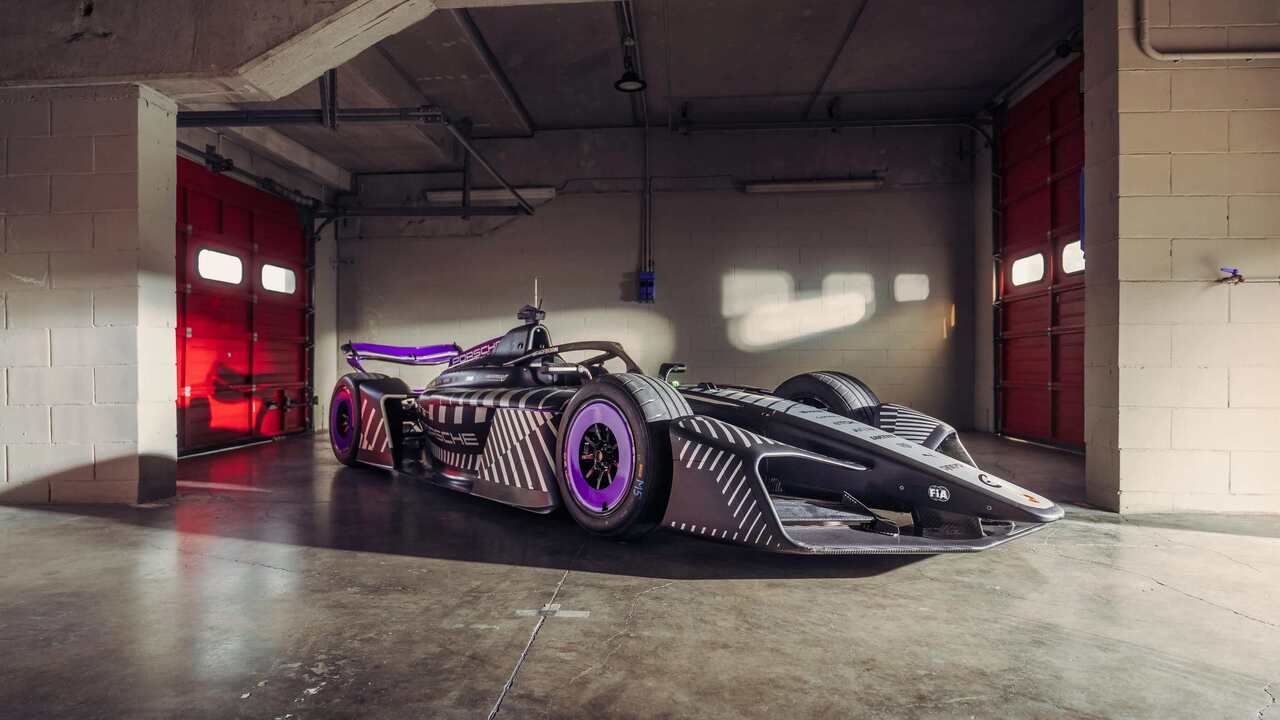
STUTTGART — Porsche Motorsport has just signaled a paradigm shift in electric mobility. With the official unveiling of the Porsche 975 RSE, the German automaker isn’t just launching a new race car; it is debuting a high-speed laboratory designed to shatter the perceived limits of electric powertrains.
Set to hit the track in late 2026—coinciding with the 75th anniversary of Porsche Motorsport—the 975 RSE marks the transition from Formula E’s “efficiency-first” origins to an era of uncompromised raw performance.
From Efficiency to Extremity
For the past decade, Formula E was a game of conservation. The GEN4 regulations, however, have allowed Porsche to pivot toward pure power. “GEN4 demonstrates just how far electric vehicles have evolved,” said Thomas Laudenbach, Vice President of Porsche Motorsport.
The 975 RSE is a technical brute, delivering a peak output of 600 kW (816 PS) in “Attack Mode”—a staggering 71% increase over its predecessor. This jump catapults Formula E into the same performance bracket as Formula 2, but with a thermal efficiency that internal combustion engines simply cannot touch.
Aerodynamics: The Dual-Identity Strategy
In a move that mirrors high-end hypercar engineering, Porsche has introduced a split-aerodynamic strategy to balance the demands of street-circuit racing:
- The Qualifying Trim: A high-downforce configuration that increases grip by 150% compared to the GEN3 Evo, allowing for aggressive cornering speeds.
- The Race Trim: A low-drag setup optimized for “slipstreaming” and energy conservation, enabling a top speed of 335 km/h.
This “dual-identity” allows the 975 RSE to be a surgical tool in qualifying and a long-distance runner during the E-Prix.
The “Trickle-Down” Tech Lab
The 975 RSE’s most significant impact won’t be on the podium, but in the driveways of future Porsche owners. The company has moved almost all critical development in-house, including the pulse inverters, brake-by-wire systems, and DC/DC converters.
”As efficiency nears perfection—over 97%—our focus has shifted to mass optimization and durability,” noted Technical Project Leader Olivier Champenois. Despite the massive power hike, Porsche managed to keep the total weight at a lean 954 kg. These lightweighting breakthroughs and thermal management strategies are expected to directly influence the next generation of the electric Taycan and Macan.
Charging at the Speed of Light
Perhaps the most “real-world” feature is the car’s charging capability. Designed to support 600 kW ultra-fast charging, the 975 RSE serves as a stress test for the infrastructure of tomorrow.
With a 0–100 km/h sprint of just 1.8 seconds, Porsche isn’t just defending its World Manufacturer Championship title; it is proving that the future of electric performance is no longer a compromise—it’s an upgrade.
Key Technical Specifications
|
Feature |
Specification |
|
Peak Power |
600 kW (816 PS) |
|
Top Speed |
335 km/h |
|
0–100 km/h |
~1.8 Seconds |
|
Energy Recovery |
700 kW (Regenerative Braking) |
|
Charging |
600 kW Ultra-Fast Charging |
|
Weight |
954 kg (excl. driver) |
SEO keyword :
Meta deskripsi:
Excerpt:


