

Inizzy, JAKARTA — The Indonesian Internet Service Providers Association (APJII) has urged the Ministry of Communication and Digital Affairs (Komdigi) to involve 1,370 Internet Service Providers (ISPs) across 18 regions in the Internet Village 2025 program.
APJII Chairman Muhammad Arif emphasized that cooperation between the government and ISPs is vital to ensure equal access to the internet in rural and remote areas.
“This must be supported by regional ISPs, as APJII now has more than 1,370 members nationwide,” Arif said on Tuesday (September 30, 2025).
Arif also reiterated APJII’s full support for the government’s efforts to expand internet connectivity across Indonesia.
Expanding Rural Internet Access
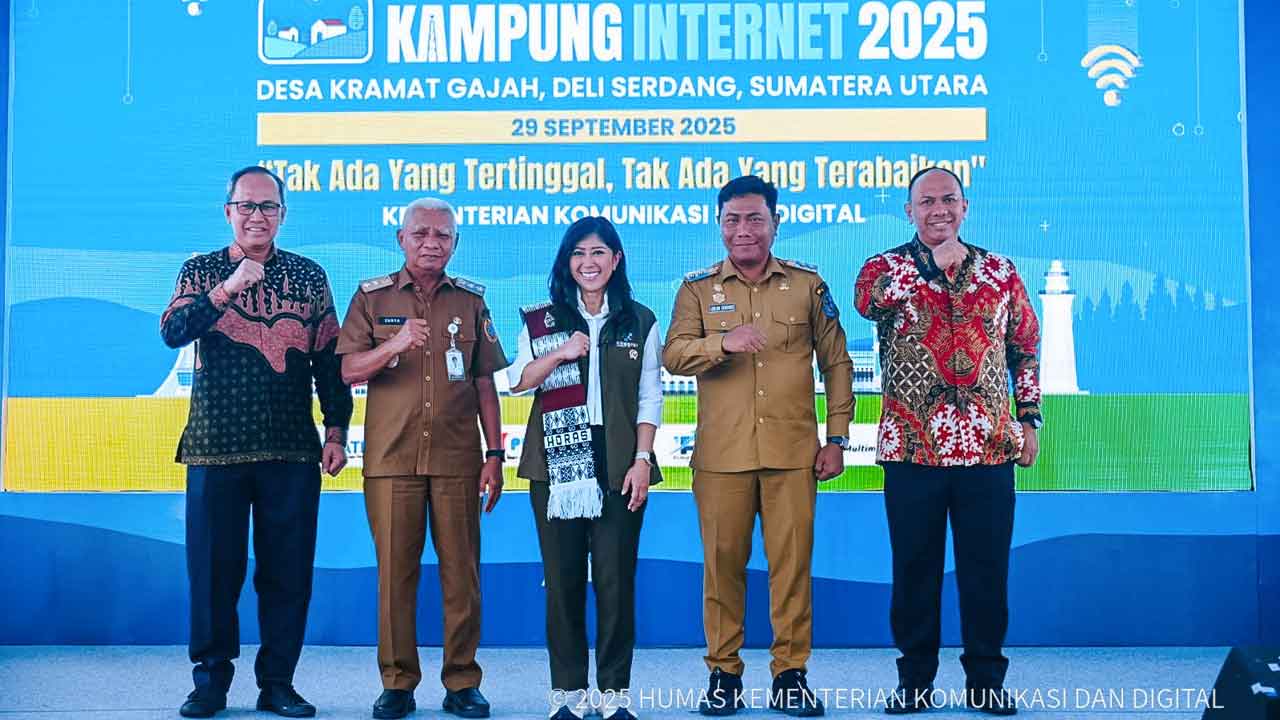
Komdigi officially launched the Internet Village 2025 program on September 29, 2025, in Kramat Gajah Village, Deli Serdang Regency, North Sumatra. The program aims to establish 1,194 beneficiary sites across five provinces: North Sumatra, West Nusa Tenggara, Lampung, West Java, and Banten.
In the first phase, 307 sites will be built in North Sumatra, supported by the deployment of 196 kilometers of fiber optic cable.
Minister of Communication and Digital Affairs Meutya Hafid highlighted the role of internet access in driving rural development.
“With Internet Village, school children can study more easily, small businesses can expand their markets, and village public services can become more efficient. This is the driving force behind rural progress in the digital era,” Meutya said in Komdigi’s official statement on Monday (September 29, 2025).
Aligned with National Development Targets
The Internet Village 2025 initiative is aligned with the National Medium-Term Development Plan (RPJMN) 2025–2029. The plan targets 50% household broadband penetration, fiber optic coverage in 90% of districts, and internet speeds of 100 Mbps by 2029.
Currently, only 21% of Indonesian households have fixed broadband access. “This shows that we still have significant work ahead. Internet Village is one of the initiatives to meet that target,” Meutya added.
In addition to network expansion, Komdigi provided a fiber optic laboratory to SMK Negeri 1 Lubuk Pakam in North Sumatra, aimed at training teachers and students in telecommunications network skills.
Multi-Stakeholder Collaboration
The program is being implemented through collaboration between Komdigi, the Indonesian Association of Telecommunication Network Providers (APJATEL), local governments, and industry stakeholders.
“To build connectivity, we cannot work alone. The central government, regional administrations, industry, and communities must join forces,” Meutya concluded.


