

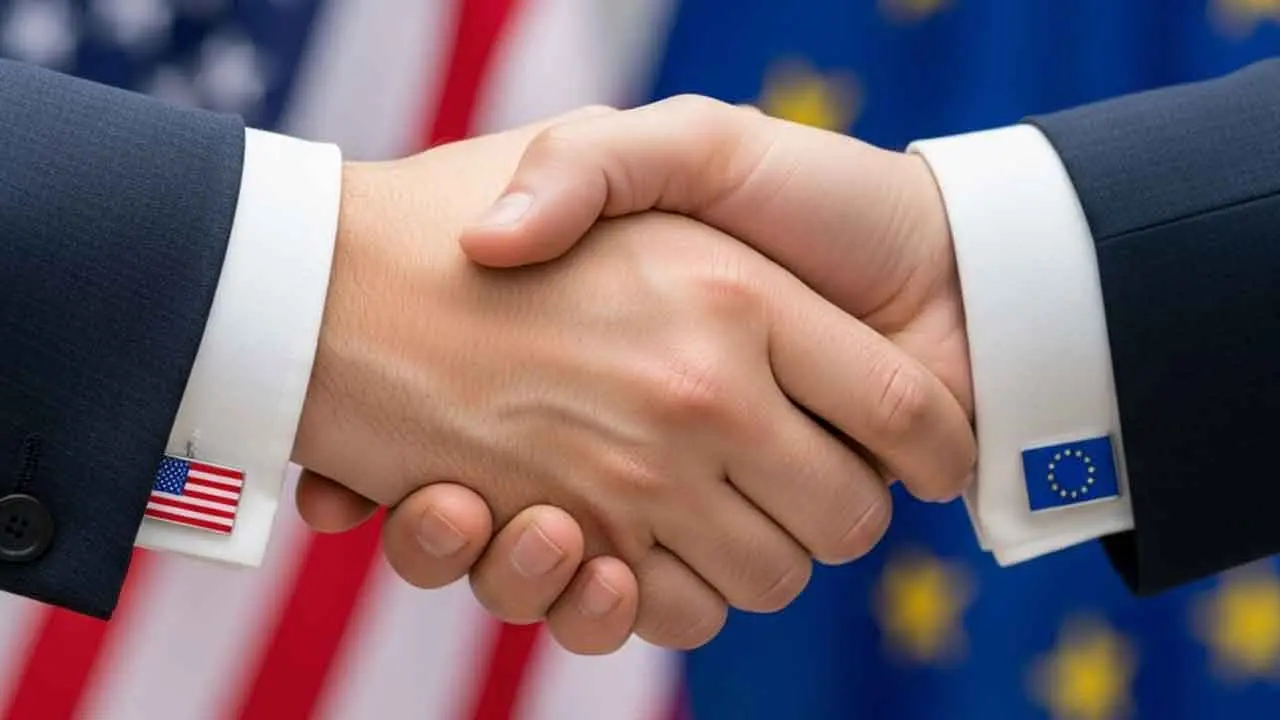
Inbizzy, Scotland – The United States and the European Union have finalized a landmark trade agreement, concluding four months of intensive negotiations between Washington and Brussels.
According to a report by Reuters , the deal was formally announced at Turnberry, US President Donald Trump’s golf resort in Scotland. Both sides agreed to impose a 15% import tariff on the majority of EU exports to the US.
This agreement is considered a major step in averting a transatlantic trade war that could have destabilized the global economy. The 15% tariff is notably lower than the 30% rate previously threatened by President Trump had talks failed by the August 1 deadline.
“This is a big deal, a very big deal,” said Ursula von der Leyen, President of the European Commission. “This agreement will bring stability and certainty to both sides.”
President Trump hailed the pact as “a major partnership” and described it as “the strongest trade deal in the world.” In addition to the tariff deal, the EU committed to purchasing US energy products worth US$750 billion over the next three years. The products include oil, liquefied natural gas, nuclear fuels, and semiconductors.
Key Highlights of the Agreement
- 15% Base Tariff on most EU exports to the US, up from a previous average of 4.8%.
- 50% Steel Tariff remains in effect, despite criticism from European industries.
-
Zero-Tariff Exceptions for:
- Aircraft and components
- Semiconductor equipment
- Selected chemicals
- Specific generic pharmaceuticals
- Agricultural goods
- Critical raw materials
-
EU Commitments:
- US$750 billion for US energy and semiconductor imports
- Additional US$600 billion investments, including in defense
German Chancellor Friedrich Merz welcomed the deal, highlighting the relief it brings to Germany’s automotive export sector.
Italian Prime Minister Giorgia Meloni stated she would “review the details carefully”, but acknowledged the importance of “trade stability”.
Irish Deputy Prime Minister Simon Harris criticized the 15% tariff but emphasized that “certainty matters more” for economic planning and post-Brexit trade alignment, particularly given the 10% special tariff for Northern Ireland.
Strategic and Global Implications
The deal helps stabilize a €1.4 trillion trade relationship between the US and EU—two of the world’s largest economic blocs. EU Trade Commissioner Maroš Šefčovič admitted that the negotiations were “very intense” and described President Trump as “a very tough negotiator.”
Global markets responded positively, as investors had grown increasingly nervous over Trump’s aggressive tariff policies, which had previously rattled global trade, including with Japan and China.
President Trump also hinted that a trade deal with China is “very close”, as reported by the South China Morning Post, with a 90-day tariff pause extension potentially coming before the August 12 deadline.
The US-EU trade agreement announced in Scotland marks a significant milestone in global trade diplomacy under Trump’s administration. While concerns remain over specific tariff rates, the renewed certainty and strategic direction have been well received by the international business community.


